
Great spaces aren’t just about aesthetics—they’re about “unlocking human potential” to achieve peak performance.
With over five decades of experience in workplace consulting and design, providing solutions to leading organizations across various industries, Rockworth has gathered deep insights and embraced Activity-Based Working (ABW) principles. This approach is summarized into 5 working modes that address every modern work activity.
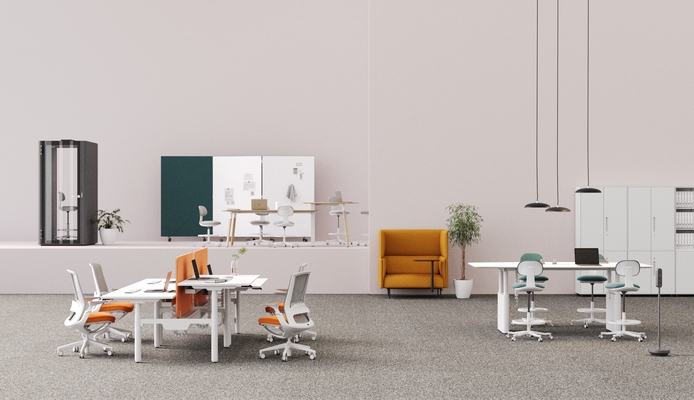
“People Don’t Work the Same Way All Day”
Rockworth reveals, “What we’ve learned from working with hundreds of client organizations is that people don’t work the same way all day.”
For instance, a programmer’s workday might start with needing a quiet space to write code in the morning, then at 2 PM they might need to join a quick team meeting, at 3 PM make a client call, and by 4 PM want to sit in a common area to change scenery and solve problems that have been lingering since morning.
However, most offices have been designed with a “One-Size-Fits-All” approach—giving everyone a desk and expecting them to sit there all day. This doesn’t align with reality at all.
From this observation, Rockworth has committed to applying Activity-Based Working principles to workspace design based on “activities” rather than “job titles.”
The 5 Essential Working Modes in Modern Offices
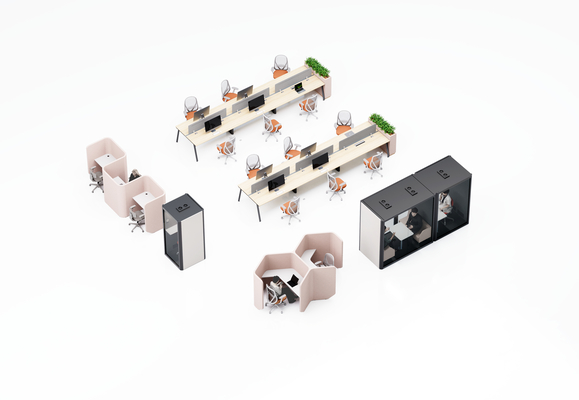
Mode 1: FOCUS – For High-Concentration Work
Common Problem: “Clients frequently tell us employees complain about noise, can’t do thinking-intensive work, and some arrive at the office very early or leave late just to find quiet.”
Solution: Allocate at least 30-35% of total space, including:
- Noise-free rooms (Quiet Room/Silent Zone)
- Phone booths for calls or private online meetings
- Personal workstations with sound management systems
Rockworth’s Tip: “Use acoustic panels and choose furniture that absorbs sound. Investing in noise management tools is highly valuable because it helps employees work faster.”
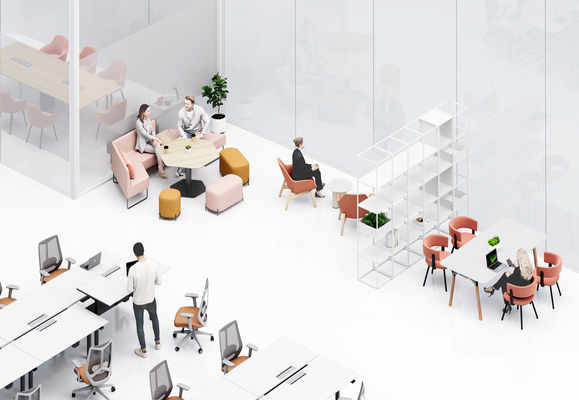
Mode 2: COLLABORATE – For Meetings and Teamwork
Common Problem: “Meeting rooms are always booked, or rooms are too large for small teams, forcing people to talk at their desks and disturbing those trying to concentrate.”
Solution: Allocate 25-30% of space, including:
- Meeting rooms in various sizes (emphasizing small 2-4 person rooms over large ones)
- Open collaboration areas for quick meetings
- Project rooms for teams working on long-term projects
Rockworth’s Tip: “Our recommended meeting room ratio is 60% small : 30% medium : 10% large, because most meetings are small teams of 2-4 people rather than large gatherings of 10-15.”
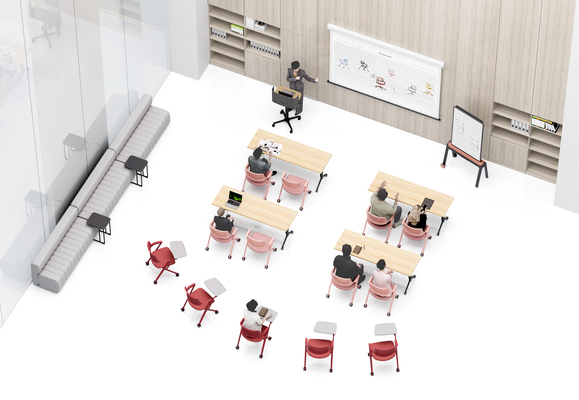
Mode 3: LEARNING – For Skill Development
Common Problem: “Many organizations say they want employees to develop skills but lack appropriate spaces for learning.”
Solution: Allocate 10-15% of space, including:
- Training rooms with audio-visual systems and flexible furniture
- Libraries or corners with learning resources
- Comfortable seating suitable for reading or online learning
Why Learning Mode Matters: “Learning spaces aren’t used daily, but they demonstrate that the organization values employee development, which reflects brand identity and commitment to continuous personnel development.”
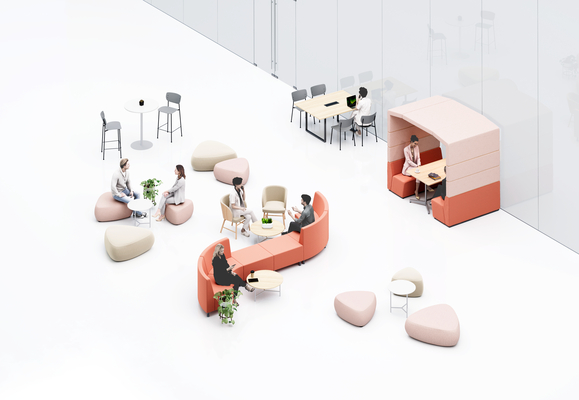
Mode 4: SOCIALIZE – For Rest and Building Internal Networks
Common Problem: “Employees barely know people from other teams, organizational culture is unclear, working in silos with no conversation or exchange.”
Solution: Allocate 15-20% of space, including:
- Open kitchen or coffee areas with good ambiance
- Reception or common areas
- Recreation spaces such as board game areas
- Outdoor spaces (if available)
Rockworth’s Tip: “Social spaces aren’t wasted space but an investment in culture and innovation, because many innovations come from casual conversations, not meeting rooms.”
Example: “Many clients have told us that their teams’ best ideas often come from coffee corner chats rather than meeting rooms.”
Mode 5: RELAX – For Unwinding and Recharging
Common Problem: “Employees feel burned out with nowhere to truly rest except their work desk.”
Solution: Allocate 5-10% of space, including:
- Quiet or wellness rooms
- Meditation or yoga spaces
- Nap rooms (for short 15-20 minute rests)
- Prayer rooms or spaces for various faiths
Client Feedback: “Initially many organizations didn’t see the necessity, but once they tried it, employees loved it and felt the organization genuinely cared about their well-being.”
Trend: “Gen Z and Millennials, who are becoming the main workforce, place greater importance on wellness. Having rest spaces is part of building and maintaining a positive employer brand, making organizations more attractive to younger generations.”
The Bottom Line: ABW is the Future of Workplace Design
Ultimately, a great workspace isn’t measured by aesthetics but by how well it serves people at every moment of their workday—whether they need silence to write code, space to brainstorm with their team, or just a place to rest before continuing work. This is the core principle of Activity-Based Working (ABW): designing spaces around what people actually do, not where they sit.
When organizations embrace ABW and design spaces based on “activities” rather than “job positions,” what follows isn’t just improved efficiency, but a culture where people want to stay, want to work, and are ready to create new things together. Activity-Based Working recognizes that different tasks require different environments, and by providing these varied spaces, companies unlock their workforce’s full potential.
We believe that technology may change, work methods may change, but what doesn’t change is that “people need spaces that help them work at full potential and be happy.” ABW isn’t a trend—it’s a fundamental shift in how we think about workplace design.
Workspace isn’t just a cost—it’s an investment in people. And people are an organization’s most valuable resource. By implementing Activity-Based Working principles, organizations create environments that don’t just house employees, but empower them to do their best work every single day.
Contact Rockworth:
- 📱 Facebook: Rockworth
- 📱 LINE Official: @rockworth
- 💼 LinkedIn: Rockworth Thailand